AS SEEN ON
FOR EXPERIENCED PROFESSIONALS WHO GET NERVOUS SPEAKING AT WORK
Speaking at work shouldn't take this much out of you.
Learn how to handle the nerves and the situations that throw you, so that meetings, presentations and being put on the spot stop consuming so much of your working life.

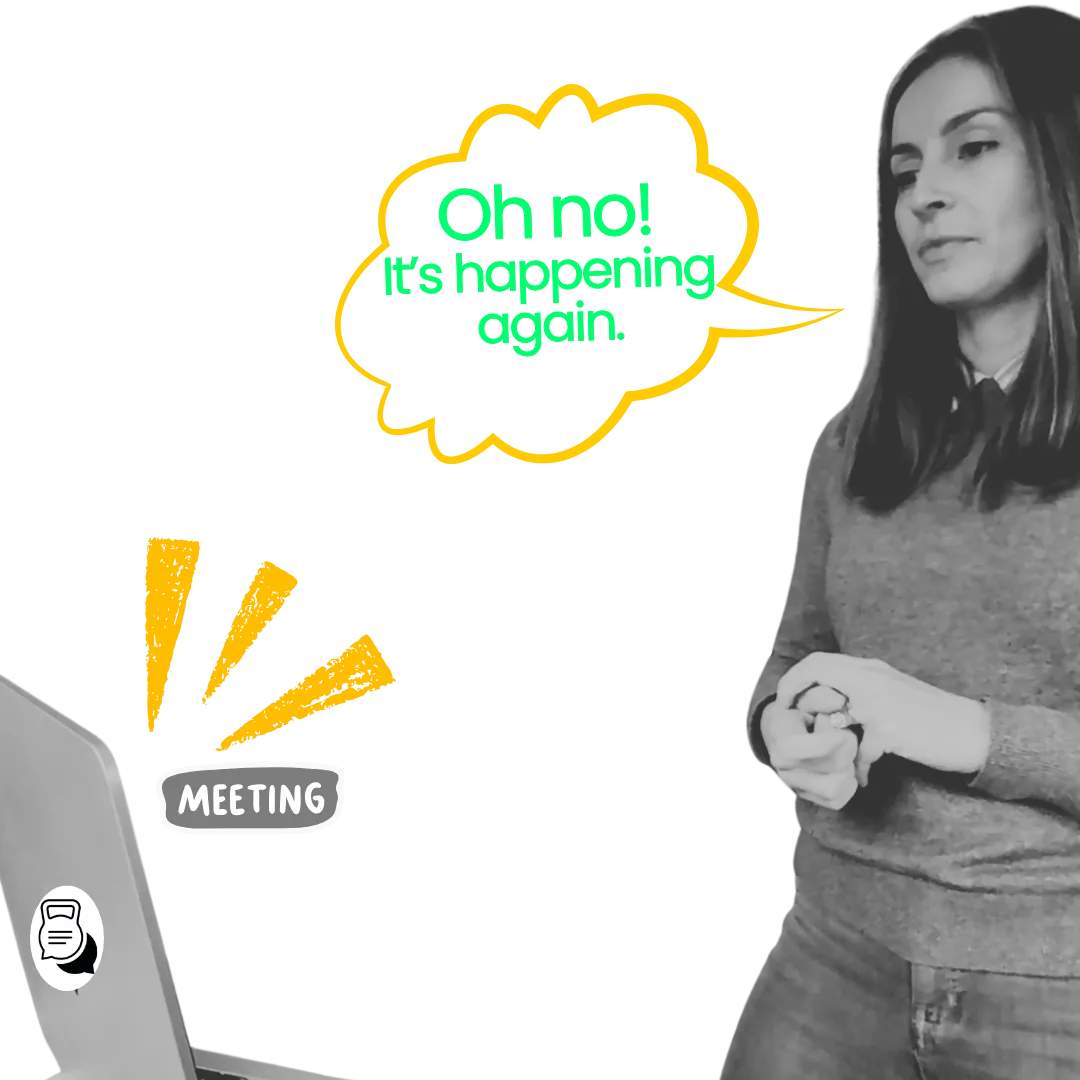
You know what you want to say. Then it's your turn to speak.
Your heart starts racing. Your breathing changes. Maybe your face feels hot. You can feel your voice starting to shake, and you feel yourself starting to lose your train of thought.
Now, instead of simply focusing on what you want to say, part of your brain is busy with:
Can everyone see I’m nervous?
Why am I rushing so much?
God, why is this happening again?
Why can’t I just do this?
For some people, the worry and dread start days beforehand - rehearsing conversations, over-preparing for fairly standard meetings, sleeping poorly the night before, or repeatedly going back over the meeting in their head when they’d really rather be thinking about something else.
And afterwards, there’s normally a harsh replay around what you should have said, and how embarrassing it is that this keeps happening to you.
The meeting might be fairly standard, but what happens around it can feel
anything but.


When they try to solve the problem alone, things get worse.
1.
YOU THINK YOU'RE
THE ONLY ONE
Everyone else seems to be getting on with it. Colleagues speak up in meetings. Friends talk about presentations like they’re
no big deal.
2.
How am I still like this at this stage of my career?
You’ve worked hard to get where you are. So the fact that this still happens can feel deeply embarrassing and completely at odds with how capable you are in every other part of your job.
3.
MAYBE THIS IS JUST WHO I AM
After a while, a more worrying thought starts to creep in. Maybe you’re always going to be the nervous one. Maybe you’ll keep holding back in meetings, avoiding the roles that involve more visibility, or talking yourself out of opportunities because you know there’ll be more speaking.
What if speaking well and handling the pressure of speaking are two different skills?
I know, because I learned this the hard way.
I worked in communications and had always been a fairly confident speaker. When I started going blank out of nowhere during Covid, I assumed I was just out of practice.
So I did what I’d always done: prepared more, rehearsed more and worked harder on my delivery.
But the more I tried to fix it, the worse it became.
I couldn’t understand it. I knew how to communicate - this was my job! So had speaking all of a sudden become harder and harder?
Eventually, I realised I was trying to solve the wrong part of the problem.
I didn’t just need to work on what I was saying. I needed to learn how to handle what was happening in my mind and body when I felt under pressure.


"The biggest change is that I feel more comfortable being myself when I speak. I don’t feel like I need to perform or be a different version of myself, and my confidence has grown a lot because of that."
-July 2026 Participant
SOUNDS good, RIGHT?
Introducing...
A 9-week live small-group programme to help experienced professionals handle their nerves and anxiety when speaking at work
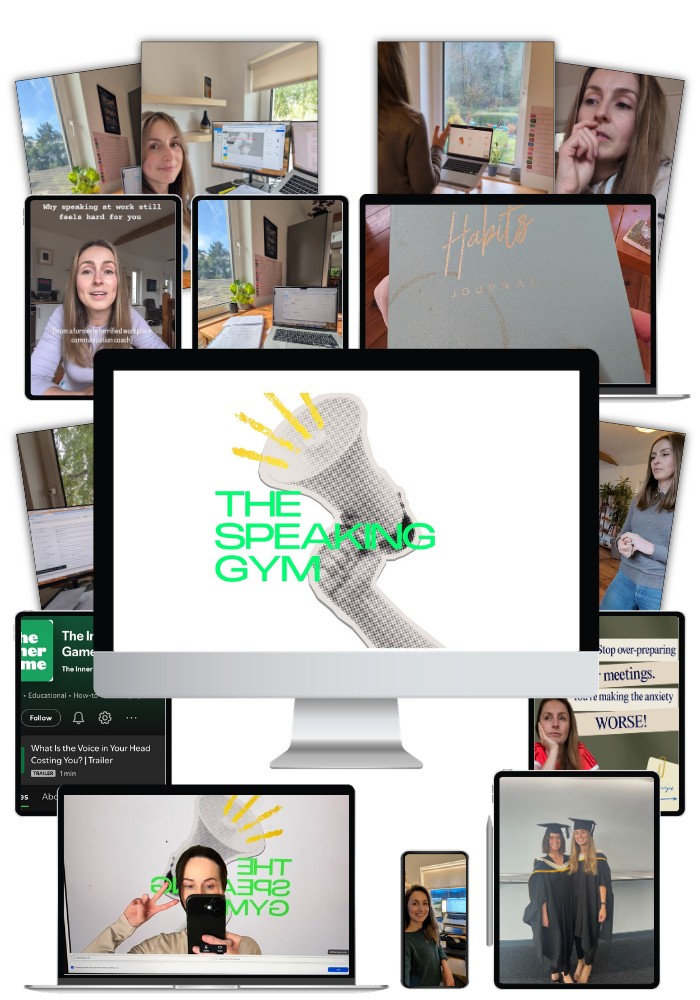
What we Work
on Inside
The Speaking Gym
STOP FEELING LIKE THE NERVES
ARE IN CHARGE.
When Your Body Reacts
When your heart starts racing, your face feels hot or your voice begins to shake, it’s easy for the reaction itself to become frightening. We’ll look at how nerves show up for you and practise ways to steady yourself before, during and after speaking.
The aim is to get to a place where “Oh God, this is happening again” can become “I know what this is and I know what helps.”
Walk Away With:
1.
Understand your triggers and how nerves show up for you
2.
Learn practical ways to steady yourself when they do
3.
Build a tested plan you can rely on before, during and after meetings & presentations
4.
Establish a regular practice that supports you beyond speaking
Get out of your own head and back into what you’re there to say.
Attention Under Pressure
When nerves kick in, your attention can turn inwards fast: Can they tell I’m nervous? Can they see me sweating? Am I rushing? The more attention goes onto monitoring yourself, the harder it becomes to stay with the conversation.
You’ll practise noticing those thoughts without getting completely pulled into them, and then learning to bring your attention back to what you’re doing.
Walk Away With:
1.
Ways to stop getting pulled into worried thoughts
2.
Tools to shift attention away from how you’re coming across
3.
Simple techniques to stay present and focused while speaking
4.
Practical ways to reset when you feel yourself starting to spiral
Get more comfortable speaking by practising before the stakes are reaL.
Safe Practice Under Pressure
The Speaking Gym gives you a regular place to practise speaking with other people who experience similar nerves and anxiety.
It’s a small, supportive group where it’s okay to stumble, go blank, feel ridiculously nervous and try again, but where there’s still enough pressure for the practice to feel real.
You’ll use the tools you’re learning while you actually speak, practise real work situations, and gradually feel more confident in the situations that typically throw you.
Walk Away With:
1.
Weekly practice speaking with the nerves still there
2.
A chance to test the tools and find what genuinely works for you
3.
More ease with being put on the spot, interrupted or losing your train of thought
4.
Real evidence that you can recover, continue and handle yourself
Organise your thoughts and land your point more clearly.
Applied Communication Skills
You’ll learn simple frameworks for organising your thoughts, answering questions, giving updates, making recommendations and handling pushback.
Each week, you’ll practise using them with the group, test which ones work best for you, and use them in your real work situations, from leadership conversations and presentations to interviews, promotions and one-to-ones.
Walk Away With:
1.
Simple frameworks to organise your thoughts clearly
2.
Structures for answering questions, giving updates and proposing an idea
3.
Techniques for communicating with senior people and handling pushback
4.
Structures you’ve tested and adapted to your own style
Build a plan you can keep coming back to
Your Personal Speaking Toolkit
Throughout the programme, you’ll try a range of practical tools, from grounding and breathing techniques to mindset prompts, reflection and ways to prepare differently, and notice what actually helps you.
By the end, you’ll bring those pieces together into your own personal plan: what supports you day to day, what helps before a difficult speaking situation, what to do in the moment itself, and how to reset afterwards.
Imagine speaking taking up less space in your life
Know what to do when the nerves kick in
AND...
Trust yourself to handle it even when it doesn’t go to plan
PLUS...
Stay focused enough to think, respond and get your point across
WITHOUT...
Losing days of your time and energy worrying about and preparing for meetings
Speaking at work becomes part of your job again - not the thing you dread most about it.
Get your time and headspace back
Stop organising your week around the next meeting, presentation or difficult conversation. There’s more room for the rest of your work, and the rest of your life.
STOP SEEING THIS AS YOUR SECRET FAILING
There’s a huge relief in knowing other capable, experienced people feel this too, and that it’s something you can learn to handle.
Stop letting speaking decide what you say yes to
Go for the role, the opportunity or the next step you actually want, without automatically ruling yourself out because it will involve more visibility.

And without having to keep doing what hasn’t worked
Without just suffering through it and hoping next time feels better
without LOSING HOURS, OR DAYS, TO OVER-PREPARING
without FEELING LIKE YOU HAVE TO HIDE HOW NERVOUS YOU ARE, OR PRETEND YOU'RE FINE
We know this takes time to practise and embed
So we’ve included a little extra support along the way to help you make sense of what’s coming up, keep practising what works, and keep building on your progress.
Get clear on what you need most from the programme
A private check-in after Session 1
A one-to-one space to talk through what came up for you in the first session, your main takeaways, and what you want to focus on so you can get the most from the programme.


Keep building on your progress after week nine
Continued group support for two months
For two months after the programme, you’ll be invited back for monthly group check-ins and practice sessions to review what’s working, talk through anything challenging that’s come up at work, and decide what to focus on next - so you can keep practising and building on the progress you’ve made.
Step 1: Book A Call
Choose a time that suits you for a short introductory Zoom call. There’s no commitment, just a chance to see if The Speaking Gym could be right for you.
Step 2: We’ll Talk
We’ll talk through the programme, answer your questions, and make sure this is the right step for you.
Step 3: Secure Your Place
Pay your €500 deposit to confirm your spot in your chosen cohort.
Step 4: Onboarding
Before the programme starts, you'll get access to our community space, complete a short pre-programme survey, and receive all the details for your first session.
Step 5: The 9 Weeks Begin
You'll join us for 9 weekly live sessions (first session 2 hours, then 90 minutes each week). You'll learn nervous system regulation, practice speaking in a safe environment, and build the tools to handle pressure.
Step 6: Post-Programme Support
After the 9 weeks, you'll have two monthly check-ins to consolidate your progress, plus ongoing access to our community/practice space for your first year.
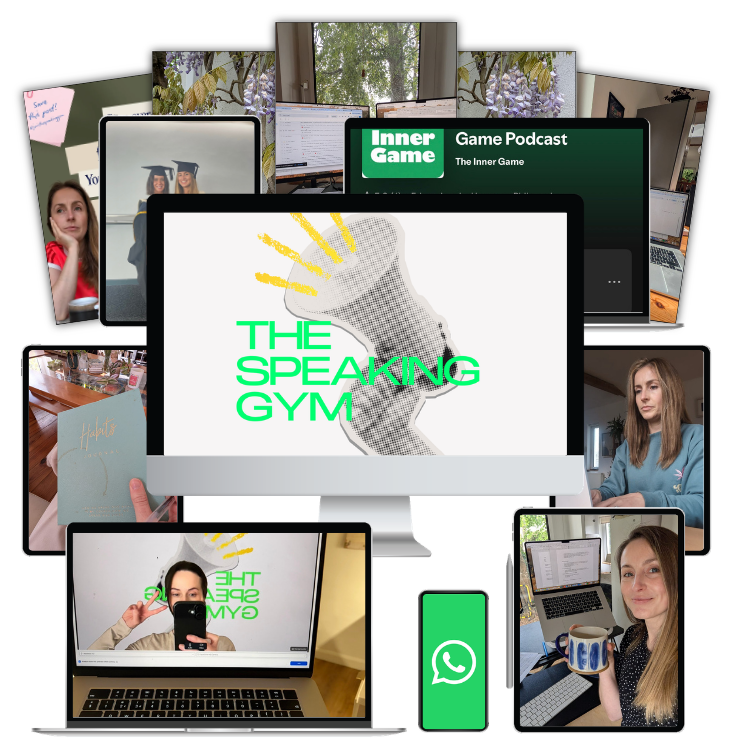
WHAT’S INCLUDED
THE CORE PROGRAMME
9 Weeks of Live, Small-Group Training & Coaching
Practical Tools & Techniques for Handling Nerves & Anxiety
Weekly Coached Speaking Practice & Peer Feedback
Your Personal Speaking Toolkit & Action Plan
ADDITIONAL SUPPORT
BONUS Offering Example one $997
BONUS Offering Example TWO $197
VALUED AT =
$4,585
Today’s Price = $$$

"The Speaking Gym teaches concrete tools and practices for better communications that could easily be applied across various careers. It was an empowering and encouraging experience which I highly recommend"
-July 2026 Participant

Frequently Asked Questions
Before you talk yourself out of it
"Is now the right time?"
There are two versions of this question.
One is: "I'm genuinely too busy right now - I've got a major project/deadline/life event and I can't commit to weekly sessions and daily practice."
If that's true, then no - now isn't the right time. This work requires showing up consistently, and if you genuinely can't do that, it's better to wait.
The other version is: "I'm scared, and I'd rather wait until I feel more ready."
If that's what's happening, then the truth is: you'll never feel completely ready. And waiting won't make it easier - it'll just mean more weeks of dread, more lost sleep, more mental energy spent preparing and replaying.
The question isn't "Am I ready?" - it's "Am I willing?"
"I get so nervous about speaking, what if I'm too nervous for this?"
This programme is specifically designed for people who experience genuine anxiety around speaking - not people who are basically fine and want a bit of polish.
If you're worried you're "too nervous," you're probably exactly the person this is for.
The group is small (max 9 people), the environment is safe and supportive, and we start with low-stakes practice. You won't be thrown in the deep end. We'll meet you where you are.
"What if I can't make one of the sessions?"
Live participation is essential - this isn't a course you can watch in your own time. The work happens in the room, with the group, in real time.
That said, we understand life happens. Recordings are available for one-off absences, but you'll need to attend the majority of sessions to get the full benefit (and to qualify for the guarantee).
"Is this a group programme or one-to-one coaching?"
It's a small group programme (max 9 participants).
The group format is intentional - it helps you see you're not alone, learn from others' experiences, and practice in a safe, supportive environment. You'll still get personalized attention and coaching within the group setting.
If you're hesitant about the group format, we get it - but we've found that the group is often the most powerful part of the work. Seeing other senior, capable people struggle with the same thing is incredibly validating, reassuring and normalising.
"How do I know if this will work for me?"
If you attend every session, do the daily practice, and fully engage with the work, it will work. That's why we offer our guarantee.
This isn't magic - it's nervous system retraining. Your body learned to treat speaking as a threat, and through consistent practice in a safe environment, it can learn something new.
But it does require commitment. If you show up and do the work, you'll see the change.
"What's included in the €2,500?"
Nine weekly sessions of approximately 90 minutes each, first session is 2 hours, held on Zoom. Throughout the programme you'll build your own Personal Speaking Toolkit - a regulation plan that's specific to you (breathing, grounding, mindfulness and mindset tools tested and chosen by you), alongside practical communication structures and phrases you can reach for time and again. You leave with something concrete - a before, during and after plan that you've actually tested and know works for you. Monthly check-ins for two months after the programme ends.
Closing Arguments. Summarize The Great Results, Offer, Bonuses, And Guarantee. Last Reminder Of Scarcity.
The Final Close
LAST CALL FOR THE MOST IRRESISTIBLE OFFER EVER
EFFECT...
Why are they in a bad position if they don't buy?
COST...
What is the opportunity cost for them to not take action?
SUMMARY...
Emotion and logic with a great conclusion and close.
CALL TO ACTION TO BUY + STACK WHAT’S INCLUDED
INCLUDED
valueD AT
Main Offering Example one $997
Main Offering Example Two $197
Main Offering Example Three $2997
Main Offering Example Four $97
Main Offering Example Five $297
BONUS Offering Example one $997
BONUS Offering Example TWO $197
VALUED AT =
$4,585

Total Value = $$$$$
Regular Price = $$$$
Today’s Price = $$$
YourBrand.com - All Rights Reserved - Terms & Conditions